

Environmental
Environmental Management Policies and Practices
The company promotes the leasing of clean-energy and environmentally friendly products (“Green Assets”) in order to reduce greenhouse gas emissions in business operations.
We are committed to creating a balance between business growth and long-term environmental conservation. To this end, we have established strategies and business directions that support corporate clients in reducing carbon emissions and waste generation. Our objective is to provide products and leasing services for clean-energy assets (Green Assets) such as electric cars, electric trucks, electric motorcycles, solar panels, and electric vehicle charging stations. We also offer waste sorting and processing machinery to produce alternative fuel, thereby encouraging the use of environmentally friendly energy and reducing reliance on fuel sources that may have adverse impacts on society as a whole. In 2025, assets in the Green Asset category grew by 12.57%.
Proportion of Rental Assets
2024

2025

PL Go Green POLO: Wearable Sustainability
Sustainability does not have to remain an idea on paper. Sometimes, it can be something we choose to wear every day.
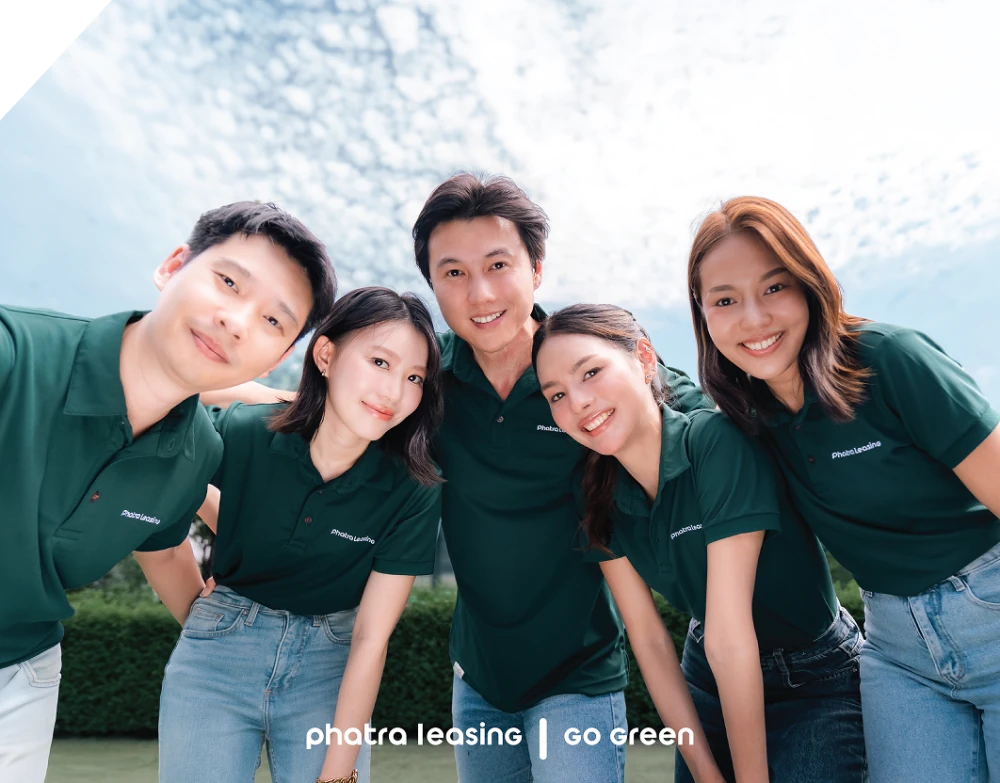
PL continues to build on the PL Go Green initiative with “PL Go Green POLO,” a corporate uniform designed with environmental considerations in every detail—from the materials used in its production to small yet meaningful elements such as the buttons. The initiative also encourages employee participation, showing that more conscious choices in resource use can start with things that are closer to us than we might think.
The polo shirt is made from fabric woven with 100% recycled fibers from plastic bottles (100% Recycled Polyester), giving used plastic bottles a new purpose as fibers for apparel production. Meanwhile, the Coffee Buttons are made from coffee grounds, transforming residual materials from an everyday routine into a value-added component of the uniform.
The commitment goes beyond material selection. PL Go Green POLO is Carbon Footprint certified, with the uniform contributing to a total reduction of 1,712 kilograms of carbon dioxide equivalent (kg CO2e) in greenhouse gas emissions. This demonstrates how environmentally conscious material choices and production processes can translate into measurable results.
For PL, a polo shirt is more than what meets the eye. It tells a story from plastic bottles to recycled fibers, from coffee grounds to buttons, and from an environmental concept to something employees can experience and use every day.
Building an environmentally conscious corporate culture does not always have to begin with a major transformation. It can start with something as simple as what we choose to use and what we choose to wear.
PL Go Green POLO – Wear Sustainability. Live the Change.




Restoring Nature through Tree Planting and Check Dam Construction under the “PL Go Green” Project
The Company places strong importance on the conservation of natural resources and the sustainable restoration of ecosystems. Under the concept of “PL Go Green”, the Company organized activities such as tree planting and check dam construction to expand green areas and maintain ecological balance. Employee volunteers participated in planting trees, helping to absorb carbon dioxide, prevent soil erosion, and provide habitats for wildlife.
The construction of check dams also plays a vital role in water retention during the dry season, maintaining forest moisture, preventing soil loss, and restoring biodiversity. These activities not only contribute to environmental protection but also foster unity, pride, and environmental awareness among employees—ensuring that rich natural resources are preserved and passed on to future generations.


Promoting and Reducing Paper Use in Work Processes
The company aims to reduce paper consumption in its work processes as part of its commitment to environmental conservation. Measures undertaken include:
- Transition to an Electronic Document System (E-Document) – Creating and storing documents in digital form instead of printing. The company has implemented a Document Management System (DMS) to efficiently organize, search, and control access to digital documents, as well as to support the use of electronic signatures (E-Signature) for approval and certification of electronic documents.
- Online Approval System (E-Approve Online) – Establishing approval workflows via an electronic system instead of paper-based document transfers, with notifications and status tracking for stakeholders at each stage of the approval process. The system also enables real-time tracking of document status.
- Paperless Meetings – Encouraging the use of tablets or other electronic devices for viewing meeting materials and taking notes, instead of printed documents.
- Primary Use of Electronic Communication – Replacing printed notices with electronic channels for internal announcements and corporate communications, disseminating information digitally rather than on paper.
- Print Management – Printing only when necessary and only for essential documents. The company uses a print tracking system to monitor printing volumes by department or user to raise awareness and improve printing efficiency. Centralized collection points for used paper are also provided to facilitate recycling.
- Awareness Building and Participation – Communicating and educating employees about the goals and benefits of reducing paper usage, fostering understanding and active involvement.
Through consistent and committed implementation of these initiatives, in 2025 the company successfully reduced paper consumption in its work processes by 5.70%

Promoting Energy and Water Conservation in Office Operations
The Company places great importance on the efficient management of energy consumption within its office operations and has implemented the following measures:
- Lighting System: Replaced conventional light bulbs with energy-efficient and long-lasting LED bulbs; maximized the use of natural light by positioning workstations near windows and ensuring regular window cleaning; raised employee awareness by encouraging lights to be switched off when leaving unused rooms or areas.
- Air Conditioning: Promoted maintaining air conditioners at 25–26°C, an optimal temperature for both comfort and energy efficiency; conducted regular maintenance and cleaning of air filters and system checks to ensure effective performance; ensured that air conditioners are switched off when not in use or after office hours.
- Electrical Equipment (Computers and Monitors): Configured computers and monitors to enter sleep or standby mode during long periods of inactivity, with mandatory shutdown after office hours; encouraged employees to unplug unused devices such as mobile phone chargers and electric kettles to prevent standby energy consumption.
- Water Fixtures and Sanitary Ware: Promoted closing water taps tightly after each use; conducted regular inspections of faucets, pipes, and sanitary ware for leaks with immediate repair when necessary; raised awareness through reminder signs and knowledge sharing on water-saving practices in restrooms.
- Awareness and Employee Engagement: Enhanced employee awareness and participation by communicating goals and benefits of energy and water conservation, encouraging staff to take part in environmental protection efforts as part of the Company’s sustainability initiatives.

Promoting the Use of Alternative Energy and Increasing the Adoption of Electric Vehicles (HEV, PHEV, BEV) in the Organization
The company promotes and prioritizes electric vehicles as the first choice for shared corporate use, taking into consideration the suitability of each department’s needs. To support this initiative, the company has installed electric vehicle charging stations for employee convenience.
In addition, the program has expanded to include the rental of electric vehicle chargers. The company also provides knowledge-sharing sessions, raises awareness, and organizes electric vehicle test-drive events to offer hands-on experience and enhance understanding. As a result of these efforts, fuel expenses decreased by 19.02% in 2025 compared to 2023.

Promoting Waste Separation and Recycling
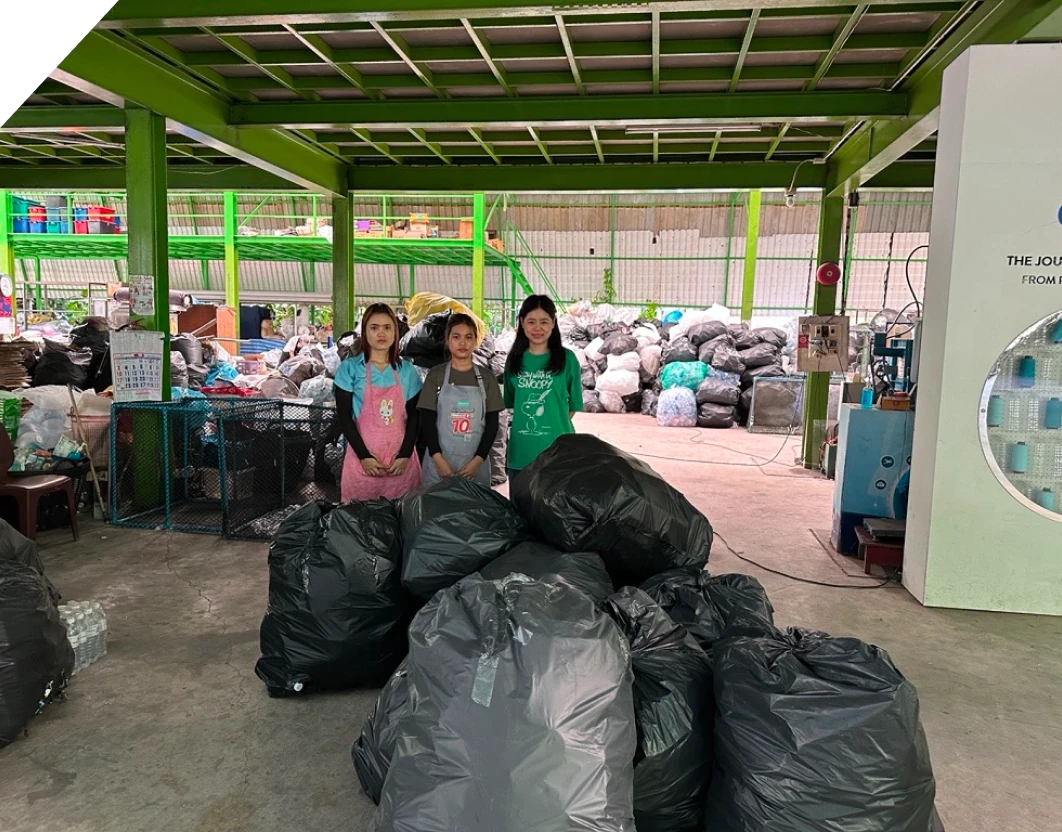
The company encourages waste separation by providing clearly labeled bins for different categories—paper, plastic, glass, metal, and general waste—each with easily understandable signs. In addition, the company operates projects to channel waste into recycling systems, such as:
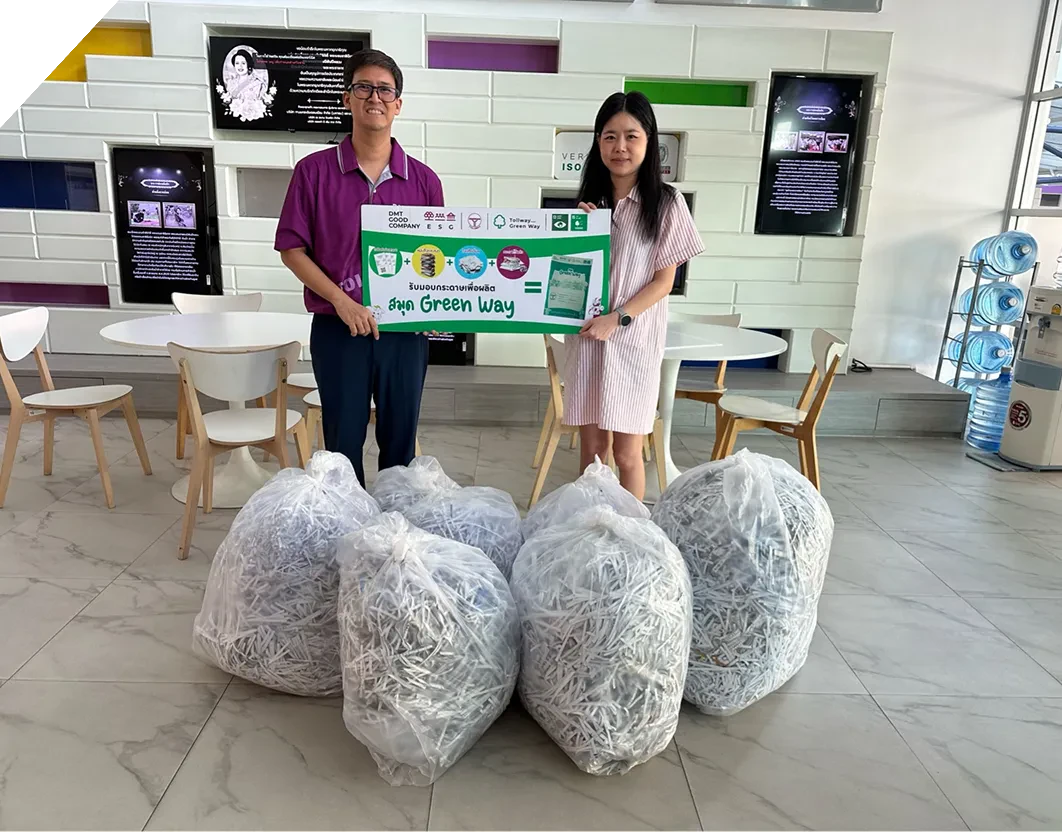
Desk Calendar Collection Project – Collecting unused desk calendars and donating them to the Foundation for the Blind in Thailand to produce braille books.
IT Equipment Donation Project – Donating unused or damaged IT equipment for proper recycling through Chulalongkorn University’s “Chula Loves the Earth” environmental project.
In 2025, a total of 483.50 kilograms of waste was separated and recycled.

Environmental Initiatives (E)
As an organization prioritizing environmental stewardship, the Company has laid the foundation for its commitment to environmental responsibility. We focus on natural resource conservation, reducing waste generated from all operational processes, and seriously promoting the Circular Economy concept for the valuable and sustainable use of resources. The Company continually organizes environmental activities that encourage employee participation. The activities undertaken during the past period are summarized as follows: